Three seconds and goodbye. How much does a slow website cost you, and why is speed crucial?
One. Two. Three. Your website takes 3 seconds to load, and more than 53% of visitors have just left it. With every extra second, the chance they leave rises sharply. So the success of your website can hinge on a single second. And a lot is at stake: first impressions and conversions.
Impatient times, impatient customers
We live in an age of fighting for attention. Hardly anyone wants to spend time waiting for your sluggish website. The data speaks for itself. The average visitor gives up fast. Up to 83% of users expect a website to load within 3 seconds. If it doesn’t, they run off to the competition and (probably) never come back.
And the ones who stay? Their satisfaction drops by 16% with every second of loading. Conversions fall too: a 1-second page delay can cut conversions by up to 7%.
For example, if an e-shop makes CZK 10,000 (about €400) a day, a 1-second page delay can cost it up to CZK 255,000 (about €10,000) a year in lost sales.
Faster wins (on Google too)
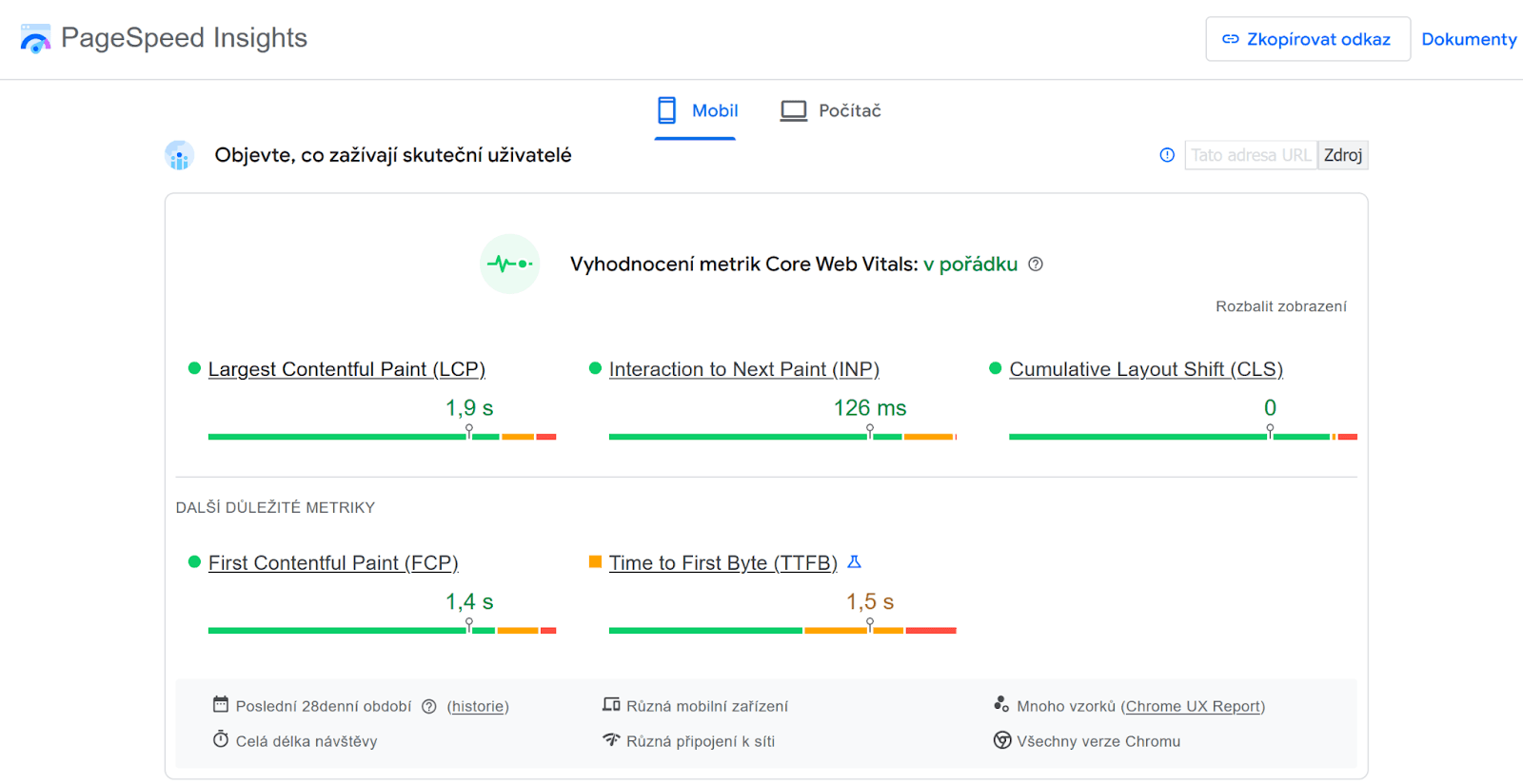
Google is impatient as well, and it “rewards” slow websites with lower positions in the SERP. It judges speed by the so-called Core Web Vitals, which include:
- LCP (Largest Contentful Paint) – how fast the main content loads (limit 2.5 s)
- FID (First Input Delay) – how fast the website responds (e.g. when you click a button) (200 milliseconds)
- CLS (Cumulative Layout Shift) – how stable the layout is while loading
Speed also affects your search ranking indirectly. Customers are more often dissatisfied with a slow website, so Google shows it to fewer people.
TEST: How do you check your website’s speed?
Want to know if time is working against you? Put the stopwatch away and try one of our favorite tools instead:
🥇Pingdom: A super simple tool: paste in the URL and get the loading result in seconds.
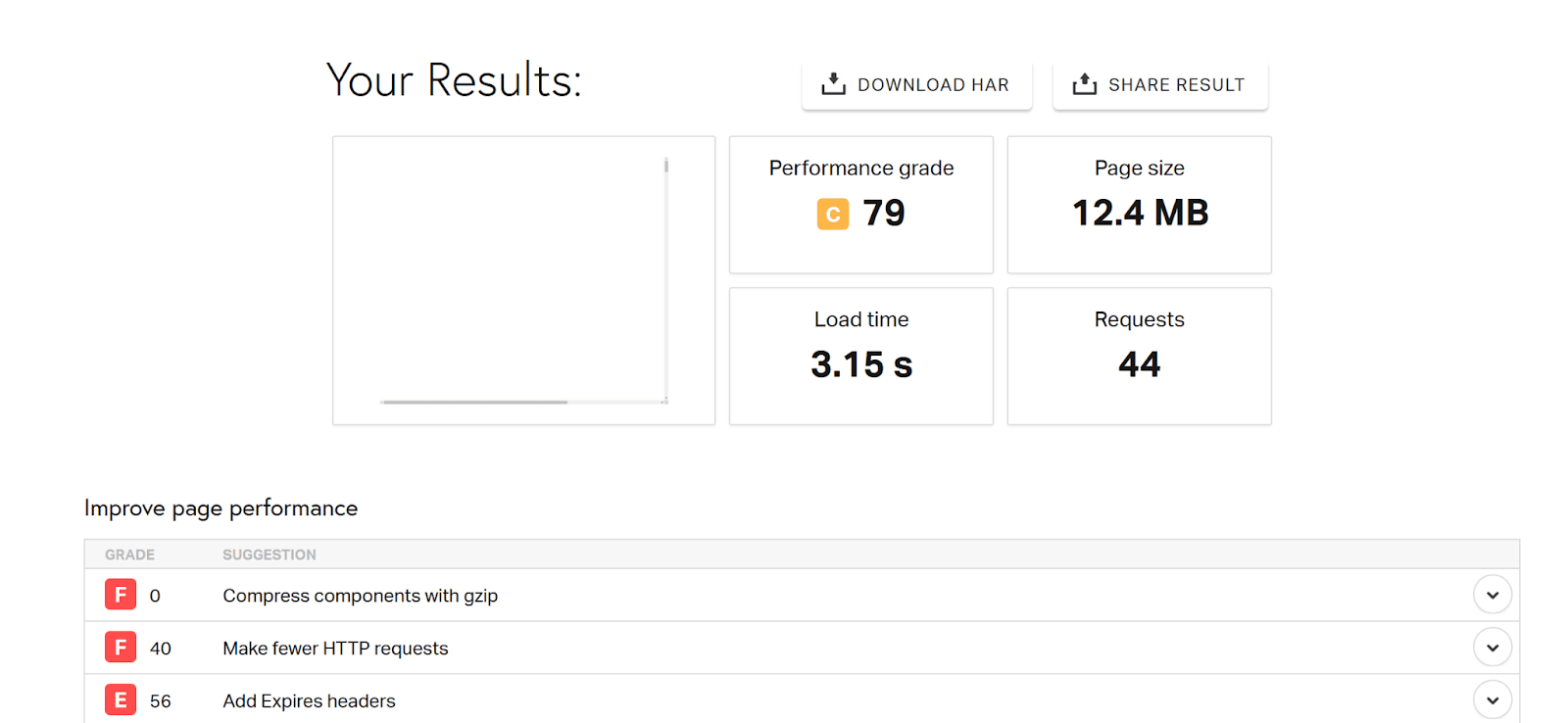
🥈 Google PageSpeed Insights: A tool straight from Google with a more detailed evaluation and tips for improvement.
Our tip: Will your website and its content also pass our general test? Take our 5-minute test and find out whether you need a new website.
From snail to Ferrari: how to speed up your website
Found out your website is a snail? Don’t despair, you can speed it up with simple changes.
- Reduce the size and format of your content – compress images and videos, use modern formats and lazy loading, and keep large files to a minimum.
- Simplify your website code – remove unnecessary plugins and redundant code so the page loads only what it really needs.
- Limit external scripts – keep banner ads, tracking codes and other external resources that slow the page down to a minimum.
- Optimize your hosting and server – choose fast hosting and a modern server, or use a CDN to load content faster.
Sometimes, though, your website limps along for more serious reasons, and the cure takes a proper IT intervention. Or a brand-new website.
Do you finally want a website that stops driving customers away? Get in touch and come in for a free consultation.
 David ŠejnaTechnical Director
David is a full stack developer with more than eight years of experience. He has built company websites, e-shops and custom web applications, and as Technical Director he leads development at Apadore.
You might also like
 A free tool that spots your website’s errors. What can Microsoft Clarity do?Do you use Google Analytics on your website? Great! Then you know how many people visited and how many bought something. But do you have any idea what exactly…
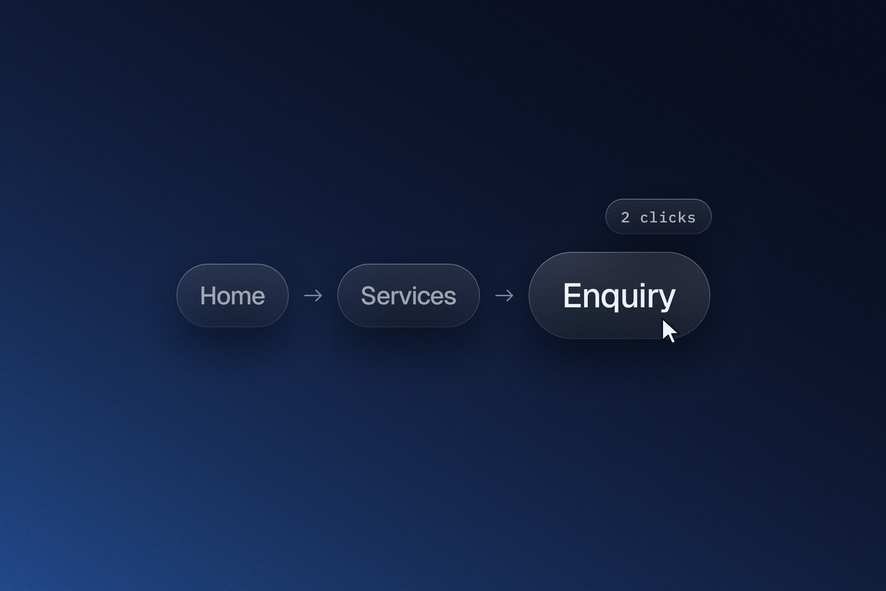 The golden 2-click rule: when does it apply and when should you break it?The 2-click rule sounds simple: a user should need no more than 2 clicks to convert.
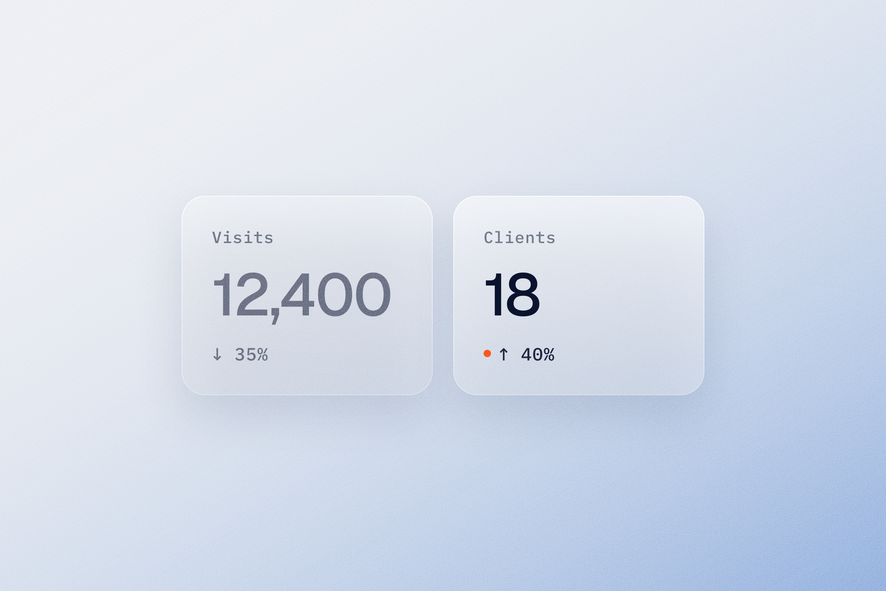 Fewer visits, more clients. Which website metrics should you track?Do you think the more visits, the better? Then you’re in for a surprise. Visits are nice, but their relevance matters more. Sometimes fewer visits…