A domain is the basic building block of any web address. Without it, the internet would not function as we know it today. If you want to run a website, create an email at your own address or run an e-shop, domain is the first thing you need to sort out.
In this article we will explain, what is a domainwhat types of domains exist, how the domain registrationhow much a domain can cost and how to check if it is domain free. You'll also learn what different national abbreviations like .cz, .at or .jp mean, and we'll look at that too, how to choose the most suitable domain for your project.
What is a domain?
Domain (or also Internet domain) is a unique name that serves as the address of the website. For example, if you type into your browser list.cz, you are entering just domain.
A domain is an easier-to-remember alternative to a complex IP address (for example 185.65.92.10), under which the site is actually stored on the server. Without domains, you would need to know the IP addresses of each site you want to visit.
Domain structure: first, second and third order
Domain names are hierarchically arranged:
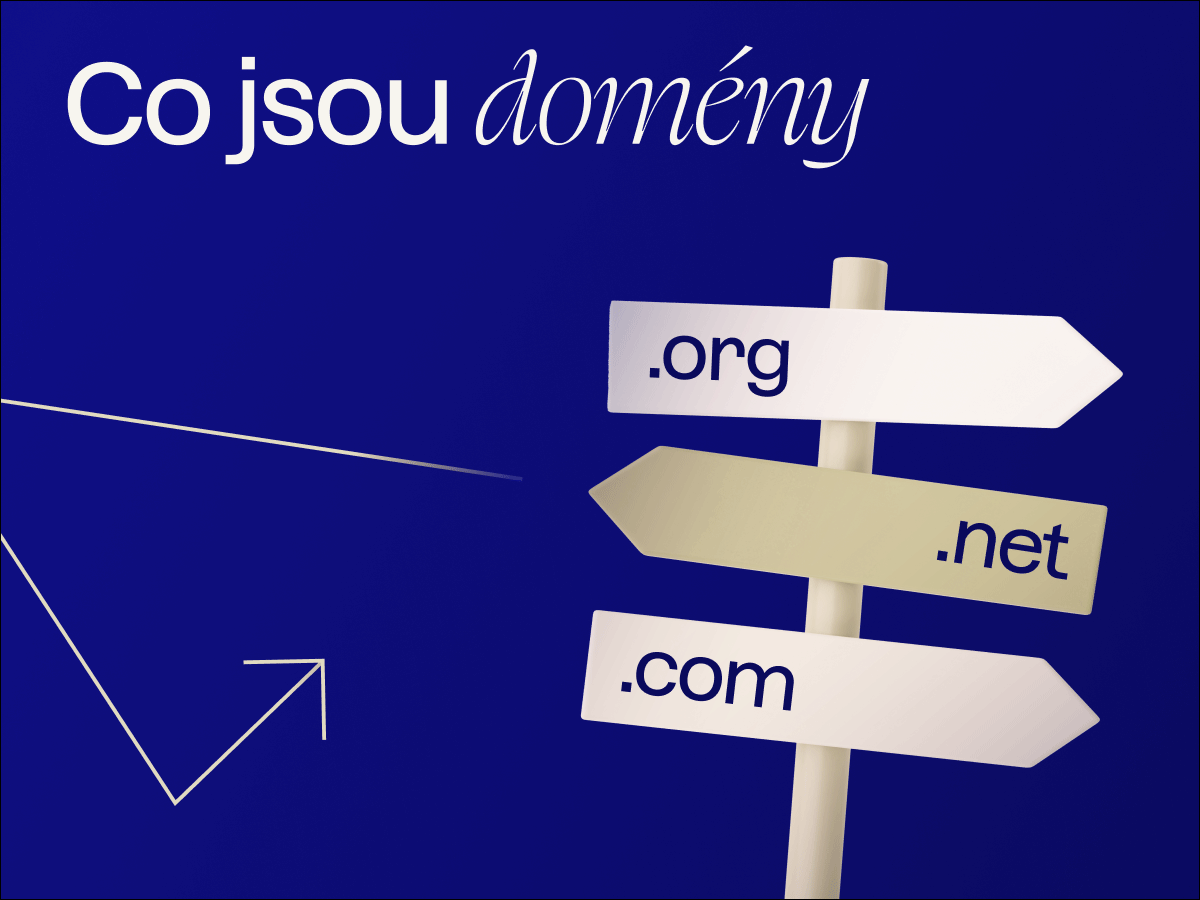
- Domain of the highest order (Top-Level Domain, TLD): for example
.cz,.com,.net,.io - Second order domain: the part before the TLD, e.g.
list.cz→listis second order - Third Order Domain (subdomain): e.g.
blog.seznam.cz→blogis the third order
A tier 2 domain represents a specific name, that the user registers - for example apadore.cz.
How to choose the right domain?
When choosing a domain, we recommend that you consider several key aspects:
- simplicity and memorability,
- safe characters (no hyphens at the beginning, no commas),
- relevance to the topic of the site,
- originality and professionalism,
- freedom on social media (check if the same name is available there)
How do I find out if a domain is free?
The easiest way is to search directly with a registrar such as Wedos, Forpsi, Subreg or Active24. You can enter the desired name and immediately see if the domain is available.
How much does a domain cost?
Domain prices vary according to:
- end caps (.cz or .eu is usually cheaper than .com)
- of the registrar (e.g. at Wedos you can find special offers)
- whether the domain is new or for sale (some premium domains can cost tens of thousands of crowns)
Example:
- Cheapest domains.eu and .cz can be purchased from 200 CZK/year
- A .com domain can cost from 800-1200 CZK/year
- Domain for sale (e.g.
reality.cz) can cost up to 50 000 CZK+
Free domain - how to get it?
It is possible to get a free domain, but it usually has a catch. Some web hosting providers offer free domain to a paid tariff (e.g. Wedos, Websupport).
Other services (e.g. Freenom) actually offer completely free domains, but only with exotic endings like .tk, .ml or .ga. These domains have less credibility and are not suitable for serious projects.
Who owns the domain and how to find out who owns it?
Domain ownership is a legally and technically specific relationship. It is important to distinguish between who actually „owns“ the domain (owner/holder) and who only technically manages it (e.g. a web agency or registrar).
To find out information about the domain holder, publicly available databases that operate on the protocol WHOIS.
How to find the owner of a domain
The procedure varies depending on the domain extension:
- Domains with .cz extension: The central register is managed by the association CZ.NIC. You can enter a domain name on their website and the system will list the publicly available details of the holder.
- Foreign domains (.com, .eu, .net): International WHOIS search engines can be used (e.g. who.is) or the pages of the relevant registers (EURid for .eu).
Impact of GDPR on data visibility
Previously, the data in the registers was fully public, including the name, address and email of the owner. After the introduction of the GDPR (General Data Protection Regulation), there has been a significant change.
- Individuals: The data is hidden by default. In the listing, you will often only see that the domain is registered, but the identity of the owner is anonymized.
- Legal entities (companies): Data on companies are usually public, as they are not covered by data protection to this extent.
The difference between ownership and renting
Technically, no one buys a domain forever. It is a lease for a fixed period (usually 1 year with the possibility of extension).
- If the holder does not pay the renewal fee, the domain goes through a protection period, after which it is released back for sale and anyone else can register it.
- Strategic warning: When creating a website, it is critically important that the domain is registered directly to the client (project owner), not a web designer or agency. In practice, it happens that if the domain is written on the supplier and the cooperation ends, the client may lose his web address.
- The professional approach (which you can also encounter here at Apadore) is that the client is always 100% the owner of the domain, while the agency acts only as a technical or administrative contact for DNS records management. This ensures maximum freedom and security for the client.
Overview: national domains and their abbreviations
A national domain indicates the affiliation of a website to a particular country. The abbreviation after the dot is called ccTLD (country code Top-Level Domain) and is based on the country's international two-letter code. Below are some examples:
| Country | National domain |
|---|---|
| Czech Republic | .cz |
| Slovakia | .sk |
| Austria | .at |
| Switzerland | .ch |
| Slovenia | .si |
| Japan | .jp |
| United States of America | .us |
| Syria | .sy |
| Germany | .de |
| France | .fr |
| United Kingdom | .uk |
| Italy | .it |
| Netherlands | .nl |
| Canada | .ca |
| Australia | .au |
| India | .in |
| China | .cn |
| Russia | .ru |
| Tonga | .it |
| British Virgin Islands | .vg |
| Caribbean (.io) | .io |
| Tuvalu | .tv |
| Ukraine | .ua |
| Gabon | .ga |
| Saint Helena | .sh |
If you ever encounter a domain like watches.ch or blog.jp, it means that the site is probably country-specific.
How does the domain registration process work?
- You choose a name and an ending
- Check if the domain is free
- Retrieved from domain registration at the selected registrar
- You pay for a domain for 1 year (or more)
- The domain is yours - but be careful, you have to renew it every year
Registration is usually a matter of minutes, especially for a .cz domain.
Summary:
A domain is your digital address on the internet. No website or email can exist without it. Whether you're looking for the cheapest domain, a free domain or a national extension for a foreign project, knowing what to look for and how to proceed is essential. And if you're still unsure about choosing a domain and want to have a website built, contact us, we'll be happy to help you with both.
Changing your domain isn't just about your website. It also affects your company's email, your SSL certificate, and any connected tools. This article summarizes everything you need to keep in mind when website migration.
A domain should always be registered in your company's name, not in the name of your web developer. An article on this topic summarizes everything you need to keep in mind, What Should a Website Development Contract Include?.
The domain owner decides who is authorized to manage the domain. That is why transferring the domain is usually the first thing that needs to be addressed when switching web hosting providers. We discuss this in more detail in the article about, What to Ask Before Switching Web Agencies.