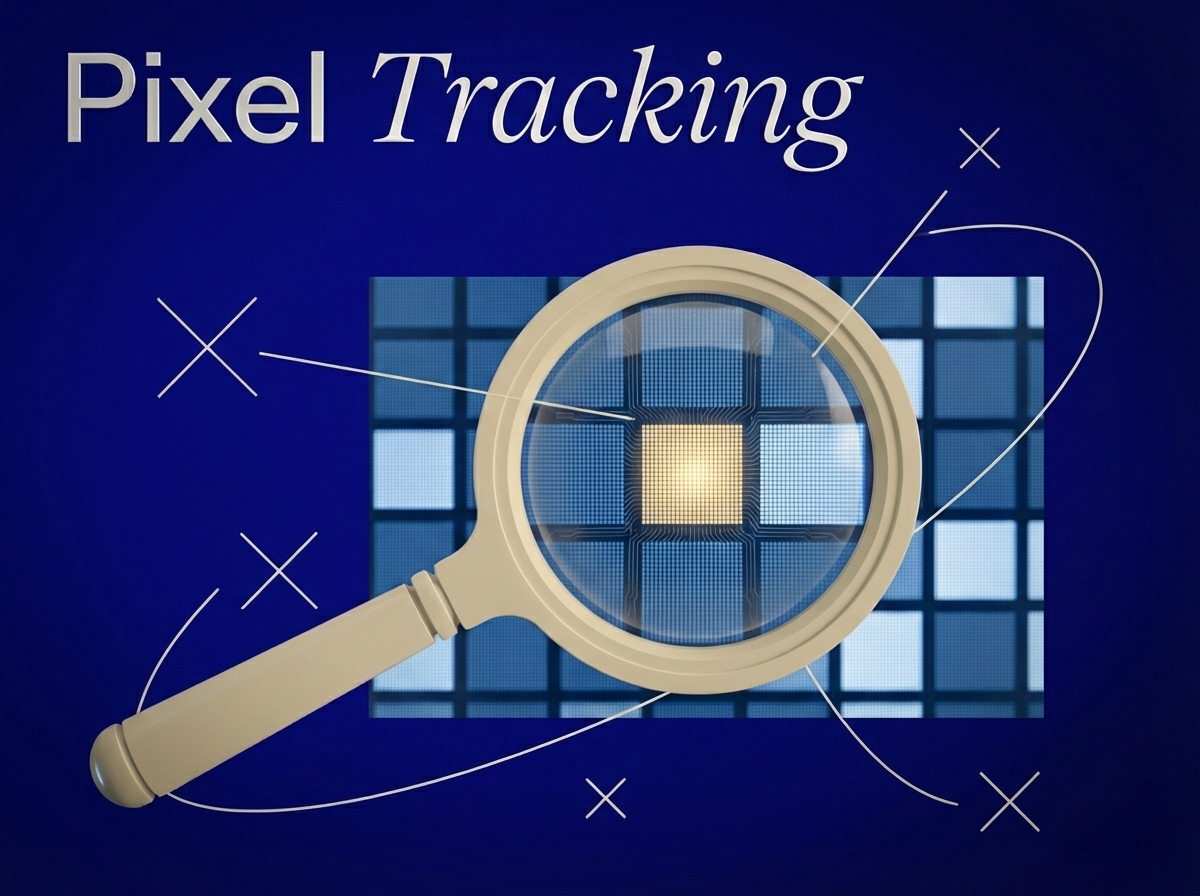
Pixel tracking is a method of measuring and tracking user behaviour on the web using a small code or image (called a tracking pixel) that is embedded in a page, email or ad. This pixel is usually invisible to the visitor, but sends data about their activity to an analytics or advertising system when it is retrieved. This can provide valuable information about the performance of your campaigns and user behaviour.
How pixel tracking works
The tracking pixel is actually one pixel image (1×1 px) or a piece JavaScript codewhich is loaded every time the user visits a page or opens an email. At that moment, it sends data to the server, for example:
- The IP address of the user,
- device and browser type,
- time of visit,
- the URL you visited,
- or other events that are connected to the pixel.
What pixel tracking is used for
1. Measuring conversions - helps to track whether visitors have performed the desired action (form submission, purchase, registration).
2. Remarketing - pixel allows you to target ads to users who have already visited the site but have not completed the conversion.
3. Campaign analysis - pixel can tell you how effective your emails, banners or social media ads were.
4. Personalisation of content - pixel data helps to display more relevant offers to users.
Advantages and disadvantages of pixel tracking
Benefits:
- detailed monitoring of user behaviour,
- the ability to optimise campaigns,
- more accurate measurement of return on investment (ROI).
Disadvantages:
- dependence on cookies and enabling tracking,
- data protection issues and GDPR,
- pixel blocking by users (e.g. adblock).
The most common pixel types
- Facebook Pixel - tracks users and measures the effectiveness of Facebook and Instagram ads.
- Google Ads Conversion Pixel - measures conversions from paid ads in Google Ads.
- E-mail tracking pixel - tracks newsletter openings and email interactions.
Summary
Pixel tracking is a subtle but very powerful method of measuring the performance of marketing activities. It allows you to understand user behaviour, optimise campaigns and increase conversion rates. But at the same time, we need to be transparent and privacy compliant to ensure that data is used fairly and securely.