What is a user flow and how do you track it?
A user flow is a visual or logical representation of how a user moves through a website or app, from the point of entry to the goal action. A typical example is a visitor’s path from the home page, through a product page, to a completed order. A user flow helps you see how intuitive and efficient your website or app really is.
How a user flow works
A user flow shows the steps a user takes and the interactions that lead them to their goal. Tracking it is often called usability testing. A user flow can include:
- Entry point – for example, arriving from a search engine, an ad or a newsletter.
- Path – the individual pages or screens the user visits.
- Decision points – moments when the user makes a decision (e.g. whether to add a product to the cart).
- Goal action – the conversion, such as submitting a form, making a purchase, signing up or another key step.
Why user flow matters
1. Better understanding of user behavior – it shows how people actually use your website and where they may run into problems.
2. Conversion optimization – once you uncover unnecessary steps or barriers, you can simplify the path to the goal.
3. A basis for a redesign – when you build a new website, a user flow helps you design a logical structure that matches users’ real needs.
4. More effective marketing – when you know where people go and what motivates them, it’s easier to target your campaigns at the right places.
How to create a user flow
- Define the goal – for example, “the user completes a purchase”.
- Map all entry points – organic search, social media, newsletter.
- Describe the steps and decision points – for example, arriving on a landing page, adding to cart, choosing shipping, paying.
- Visualize the flow – use a simple diagram or a wireframe.
- Test and optimize – track real behavior with analytics tools and user testing.
How to track a user flow
Tracking user flow is essential if you want to understand how people actually behave on your website. There are several methods and tools for this:
- Google Analytics (GA4) – offers “Path exploration” and “User flow” reports that visualize where users come from and how they continue through the website.
- Hotjar or Clarity – tools for heatmaps and session recordings. They show where people click, how they scroll and where they leave the page.
- A/B testing – with tools like Google Optimize or Optimizely, you can track how different versions of a page affect the user flow.
- Funnel analysis – focuses on a specific process (e.g. checkout) and shows where users drop off.
- User testing – watching people directly as they use the website gives you insight into problems that analytics may not reveal.
By combining analytics tools with good user testing, you get not just the data but also the context: why users behave the way they do.
Examples
- E-shop – path from the home page → product page → cart → payment.
- SaaS app – sign-up → account setup → trying out a feature → upgrade to a paid plan.
- Blog – a visitor comes from Google → reads an article → subscribes to the newsletter.
Summary
A user flow is a key tool for understanding how people use your website or app. It lets you identify weak spots in the user journey, remove obstacles and increase your conversion rate. A well-designed user flow leads to a website that is easier to use, happier users and better results for your business.
Want a website that finally stops putting customers off? Get in touch and come in for a free consultation.
 Daniel FišerSEO and Analytics Specialist
Dan has been helping companies grow through SEO, analytics and UX for over 7 years. He believes a successful website has to work for both algorithms and real people. At Apadore he is in charge of the overall visibility strategy: from traditional Google search to optimisation for AI assistants, which is key to a company's success today. He studied marketing management at the Prague University of Economics and Business and previously honed his know-how for brands such as Alza.cz and the family business Klenotnictví Dušák. When he isn't analysing data, he lifts weights, plays badminton or travels.
We write about it
 A free tool that spots your website’s errors. What can Microsoft Clarity do?Do you use Google Analytics on your website? Great! Then you know how many people visited and how many bought something. But do you have any idea what exactly…
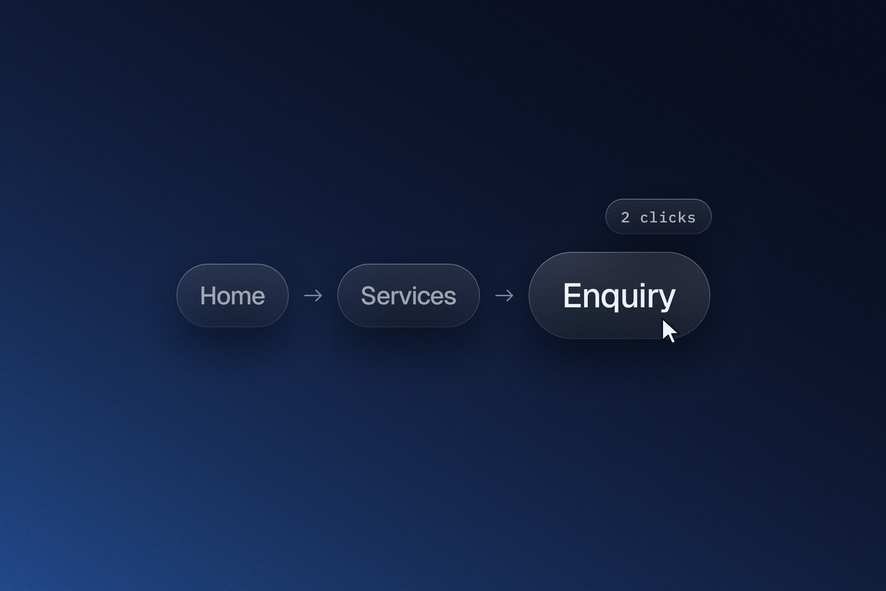 The golden 2-click rule: when does it apply and when should you break it?The 2-click rule sounds simple: a user should need no more than 2 clicks to convert.
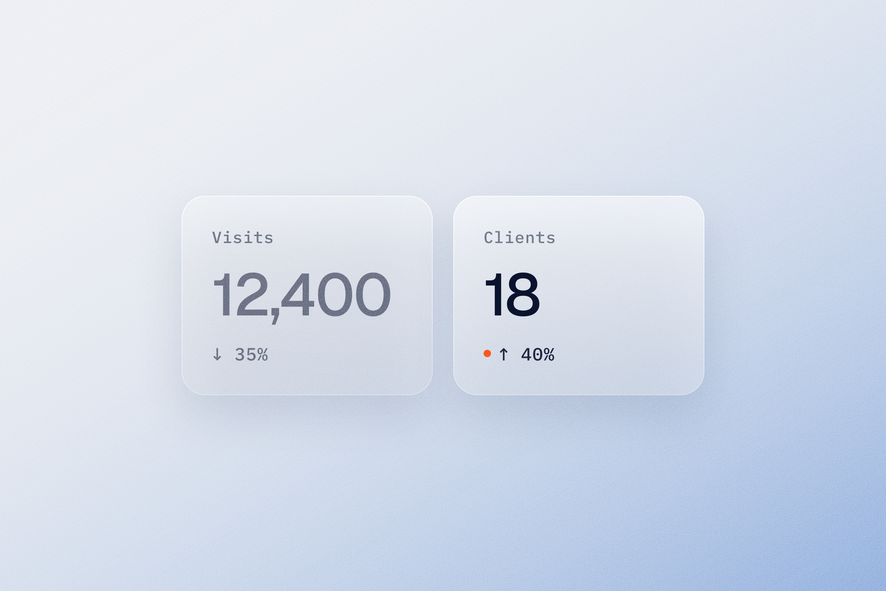 Fewer visits, more clients. Which website metrics should you track?Do you think the more visits, the better? Then you’re in for a surprise. Visits are nice, but their relevance matters more. Sometimes fewer visits…