Website indexability: check whether Google even knows you exist
Your website has been up for a while, but nobody visits it? Don’t blame your content. Maybe you’re invisible to Google and customers simply can’t find you. Don’t worry, we’ll show you how to throw off the invisibility cloak and get your organic traffic going at full speed.
Website findability in 2 steps
Before customers flock to your website, robots (search engines) first have to discover it and get to know it.
This date has two phases:
- Crawlability: the robot discovers you and explores your content.
- Indexability: the robot records your page and shows it in search results.
Only then can the search engine match you with people who are looking for exactly what you offer.
Indexing is the first step if you want to get your website on the first page of search engines. Without it, customers can only find you by typing in your exact URL. Nobody will stumble upon you through keywords, or even through your company name.
Try the quick test
Want to find out right now where you stand? You don’t need to be an IT wizard, this simple trick is enough.
Type into Google: site:vasedomena.cz (for example site:apadore.cz)
Did your website pop up?
You’re all set! It means you can be found.
Can’t see anything?
Call an SEO specialist, this needs an expert eye.
Want to go deeper? You’ll find the details in Google Search Console, for example. It shows how many of your pages aren’t indexed and why the robots are rejecting them.
Where did it go wrong?
A website that can’t be indexed is a problem. Nobody reads your great content and customers run off to the competition.
These are the most common causes of non-indexability:
- Missing robots.txt: The robots never got an invitation to your website.
- Forgotten blocks: Your code contains a noindex or nofollow tag.
- Missing sitemap.xml: The robot has no map and gets lost in the labyrinth of your pages.
- Duplicate content: You use the same content on several pages and Google doesn’t know which one to pick.
- Orphan pages: No link leads to the page, so there’s no way to get there (which is one reason why link building matters).
- Crawl budget: How many pages Google’s robots can manage to index.
There can be a whole range of culprits. If you’re not at home with the technical side, get help from an SEO specialist. They will know exactly how to prepare the ground for the robots.
Want a website that finally gets seen?
A beautiful design is not enough, you also need well-executed SEO. At Apadore, we build websites that both people and robots like. We combine creative design with hard data so that customers actually find you. Write to us and finally start showing up higher in search results.
Indexability is also directly affected by the type of redirect you use. Permanent 301 and 308 status codes tell Google that the target URL should be the canonical one, while temporary 302 and 307 codes keep the original URL in the index.
A noindex directive left over from the test environment is one of the most common mistakes during a migration. You can find the complete steps for avoiding it in our article on website migration.
Search Console stopped being just a tool for monitoring your website long ago. It now also shows how your social media posts perform in search results; see our article on measuring social media in Search Console.
A drop in visibility sometimes has nothing to do with indexability but with the anti-spam updates that Google rolls out several times a year. We explain how to tell which cause it is, and what to do next, in a separate article.
 Daniel FišerSEO and Analytics Specialist
Dan has been helping companies grow through SEO, analytics and UX for over 7 years. He believes a successful website has to work for both algorithms and real people. At Apadore he is in charge of the overall visibility strategy: from traditional Google search to optimisation for AI assistants, which is key to a company's success today. He studied marketing management at the Prague University of Economics and Business and previously honed his know-how for brands such as Alza.cz and the family business Klenotnictví Dušák. When he isn't analysing data, he lifts weights, plays badminton or travels.
You might also like
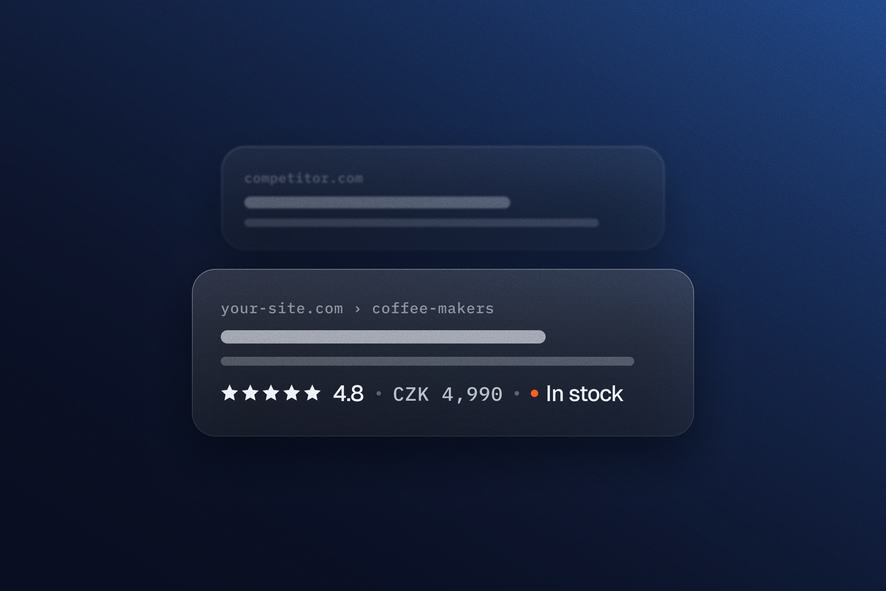 Structured Data: What It Really Brings to a Company's Website and Online Store TodayA customer searches Google for a specific coffee maker. Below the search results, they see two online stores. The first one shows only a title and a…
 Does the internet know about your company? This 2-minute test will tell youIt takes two minutes, and it’s the fastest way to find out if the internet even knows you exist. Most companies haven’t tried it yet, even though this is…
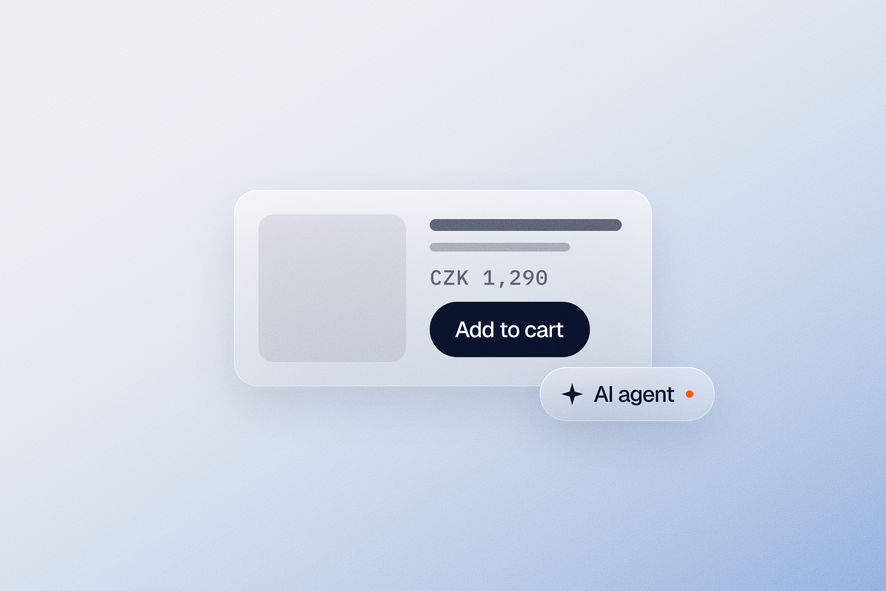 AI agents are shopping for your customers. Is your e-shop ready?If you open Google Analytics now, you’ll notice a traffic source that wasn’t there at all back in the spring: chatgpt.com. There aren’t many visits, just a few…